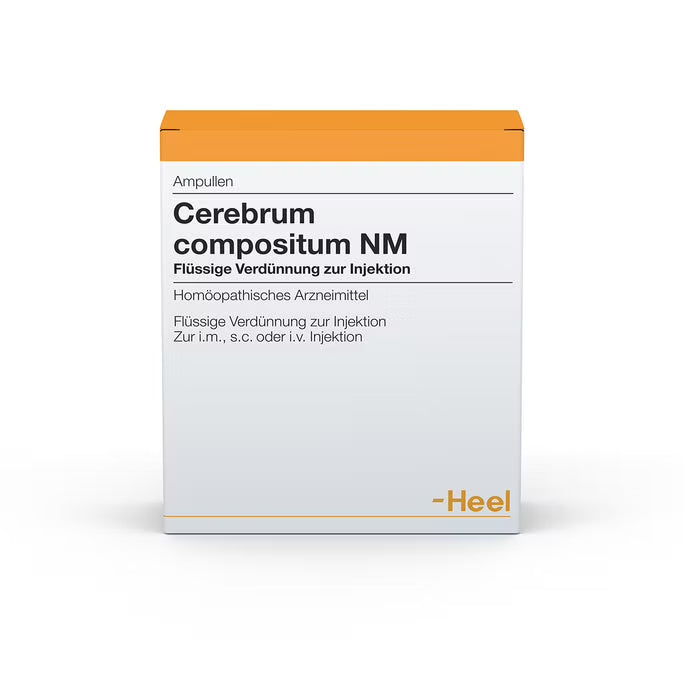
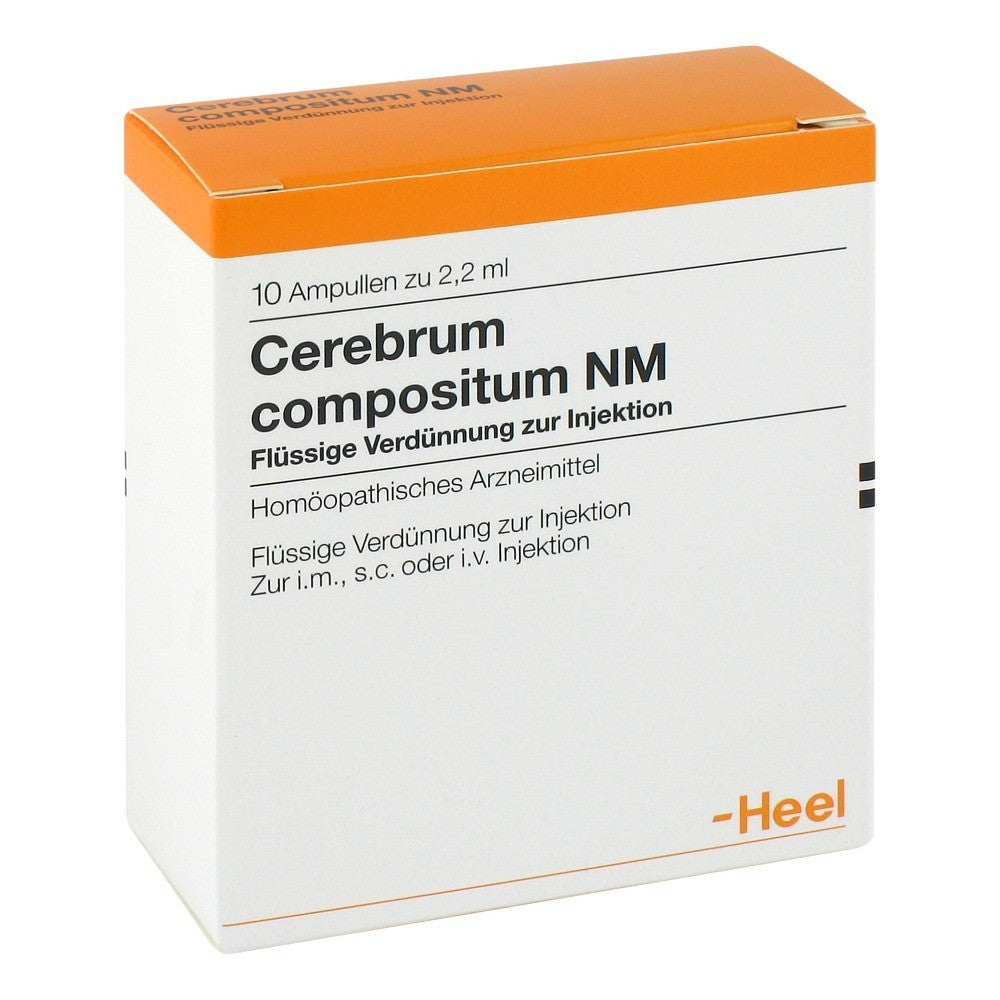
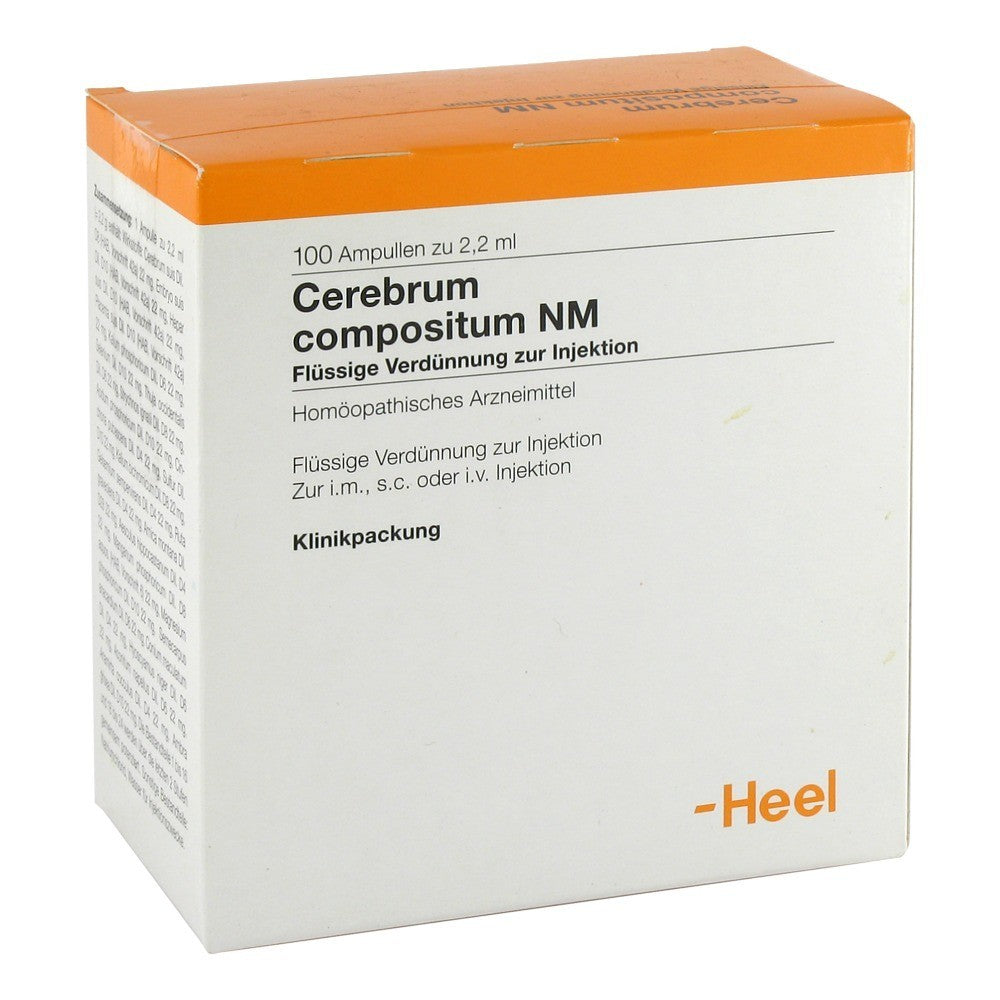
(Cerebrum Compositum, sometimes known as Cerecomp)
Indications:
Stimulation of the defence mechanism in dysontogenesis in children, legasthenia, vegetative dystonia, depression, arteriosclerosis, after commotio cerebri, after encephalitis, in neuralgia, states of agitation, amyotrophic lateral sclerosis, multiple sclerosis, Parkinson's disease, deficiency of memory, nervous exhaustion and other geriatric indications.
Dosage:
Solution: In general, 3-1 times weekly 1 ampoule if necessary also
Composition:
Solution: 2.2 ml cont.: Cerebrum suis D 8, Embryo suis D 10, Hepar suis D 10, Placenta suis D 10, Kalium phosphoricum D 6, Selenium D 10, Thuja D 6, Ignatia D 8, Bothrops lanceolatus D 10, Acidum phosphoricum D 10, China D 4, Manganum phosphoricum D 8, Magnesium phosphoricum D 10, Anacardium D 6, Conium D 4, Luesinum-Nosode D 13, Medorrhinum-Nosode D 13, Hyoscyamus D 6, Aconitum D 6, Cocculus D 4, Ambra D 10, Sulfur D 10, Kalium bichromicum D 8, Gelsemium D 4, Ruta D 4, Arnica D 28, Aesculus D 4 22 µl each.
Contraindications: None known.
Side effects: Skin reactions may occur in occasional cases; in such cases, do not continue therapy with this preparation.
Interactions with other medication: None known.
Dosage: Generally, 1 ampoule i.m., s.c., i.d. (if necessary i.v.) 3–1 times weekly.
Package sizes: Packs containing 5, 10, 50, and 100 ampoules of 2.2 ml.
Pharmacological and clinical notes
Individual action:
Cerebrum suis
Conditions of mental exhaustion, disturbances in development, disturbances of cerebral circulation and the associated functional weakness of the brain.
Embryo suis
Revitalization, arteriosclerosis.
Hepar suis
Stimulation of the detoxicating hepatic function.
Placenta suis
Disturbances of the peripheral circulation.
Kalium phosphoricum
Remedy for affections of the cerebral function; improves memory in arteriosclerosis, vertigo, tinnitus aurium.
Selenium
Improvement of the cerebral function; forgetfulness; lack of concentration.
Thuja
Constitutional remedy for deficiency of memory, difficulty in finding words, and other speech disorders.
Ignatia
Exogenic depression; lability of mood; migraine; sensation of globus.
Bothrops lanceolatus
Speech and memory disorders.
Acidum phosphoricum
Physical and mental exhaustion; poor memory.
China
Conditions of exhaustion; remedy for debility; anaemia.
Manganum phosphoricum
Weak memory; conditions of exhaustion with anaemia.
Magnesium phosphoricum
Tendency towards cramps; neuralgia.
Anacardium
Weak memory; vertigo; lack of concentration; hallucinations.
Conium
Vertigo; tremor; speech disorders; weak memory.
Luesinum‑Nosode
Weak memory; fear; depression; serious headaches.
Medorrhinum‑Nosode
Weak memory; nervousness; morning exhaustion; frontal headaches; fear of darkness.
Hyoscyamus
Confused states (delirium tremens, Korsakoff's psychosis); grimacing; sleeplessness.
Aconitum
Conditions of restlessness and anxiety; neuralgia.
Cocculus
Kinetosis; feeling of emptiness and hollowness; great exhaustion and general debility.
Ambra
Vertigo; hyperexcitability; lack of concentration and poor memory.
Sulfur
Reagent; stimulation of enzyme functions; difficulty in falling asleep and remaining asleep through the night.
Kalium bichromicum
Vertigo; frontal headache.
Gelsemium
Headache (pain in the occiput; sensation of a tight band around the head); vertigo; stupor; pain in the eyeballs.
Ruta
Asthenopia with burning of the eyes; headache after overstraining the eyes; antisclerotic agent.
Arnica
Toning action on the arterial vascular system.
Aesculus
Regulates the peripheral circulation and lymph flow; capillary action.
The total action of Cerebrum compositum is directed towards improving cerebral function, including memory, and preventing or improving circulatory disturbances from arteriosclerosis, with consequent reduction of cerebral capacity in both the aged and underdeveloped children showing poor school performance, as well as for stress. In such cases, administration of Hepar compositum, and possibly Testis compositum (males) or Ovarium compositum (females), Populus compositum SR, Hepar compositum (stimulation of hepatic detoxification), Placenta compositum (improvement of peripheral circulation), Rauwolfia compositum (for hypertonia), and Cor compositum (for myocardial weakness and cardiac circulatory disturbances) is recommended.
Preparations such as Tonico-Injeel (physical weakness), Neuro-Injeel (improvement of mental functions), and Lymphomyosot (stimulation of lymphatic drainage) may be interpolated. If there is suspicion of precancerous dermatosis or neoplasm formation, Coenzyme compositum, Ubichinon compositum, Thyreoidea compositum, and possibly Glyoxal compositum (single injection) may be used.
The improvement of cerebral and neural functions achieved with Cerebrum compositum is favourable in a wide variety of organic nervous system diseases, especially in combination with other antihomotoxic therapeutic measures (e.g. Galium-Heel) and for migraine.
The dosage is adjusted according to disease, clinical presentation, and stage of illness. At treatment start: 1 ampoule i.m., s.c., and possibly i.v. every 2 days (3 times weekly); later: generally 1 ampoule i.m. once weekly, alternating with other indicated preparations.
Cerebrum compositum NM
Homeopathic medicinal product
Product status
Registered homeopathic medicinal product, therefore without indication of a therapeutic application. If symptoms persist during use, medical advice should be sought.
Contraindications
Do not use if you are allergic to quinine, any of the active substances, or any of the other ingredients of this medicinal product.
Precautions for use
There is insufficient documented experience for use in children; therefore it should not be used in children under 12 years of age.
Ask your doctor for advice before using any medicinal product during pregnancy or breastfeeding.
This medicinal product contains less than 1 mmol (23 mg) sodium per ampoule, i.e. it is essentially “sodium-free”.
Interactions
The effect of a homeopathic medicinal product may be adversely influenced by generally harmful lifestyle factors and by stimulants and luxury foods. Inform your doctor or pharmacist if you are using, have recently used, or intend to use other medicinal products.
Note: Sensitization to quinine or quinidine is possible.
Dosage and method of administration
Unless otherwise prescribed: Use requires an individually tailored dosage by a therapist experienced in homeopathy. For self-medication, only a single administration of 1–2 ml by intramuscular (i.m.), subcutaneous (s.c.) or intravenous (i.v.) injection should be given.
To continue therapy, it is recommended to consult a therapist experienced in homeopathy.
Duration of use
As with all medicinal products, homeopathic medicinal products should not be used for prolonged periods without medical advice.
Side effects
Like all medicinal products, this medicinal product can have side effects, although not everybody gets them.
- In individual cases, skin reactions may occur; discontinue use if this happens.
- In persons with known hypersensitivity to plants of the daisy family (Arnica), hypersensitivity reactions (up to anaphylaxis) may occur in individual cases.
- Temporary redness, swelling and pain at the injection site may occur.
- In rare cases after using quinine-containing medicinal products, hypersensitivity reactions such as skin allergies or fever may occur; seek medical advice.
- When using homeopathic medicinal products, existing symptoms may temporarily worsen (initial aggravation). In this case, stop using the product and consult your doctor.
Instructions for opening the ampoule
Coloured dot facing upwards. Allow solution in the ampoule tip to flow downwards by tapping or shaking. With the coloured dot facing upwards, pull the ampoule tip backwards to break it off. Open the ampoule carefully and follow the instructions.
Composition
1 ampoule of 2.2 ml (= 2.2 g) contains:
- Cerebrum suis Dil. D8 (HAB, regulation 42a) – 22 mg
- Embryo suis Dil. D10 (HAB, regulation 42a) – 22 mg
- Hepar suis Dil. D10 (HAB, regulation 42a) – 22 mg
- Placenta suis Dil. D10 (HAB, regulation 42a) – 22 mg
- Kalium phosphoricum Dil. D6 – 22 mg
- Selenium Dil. D10 – 22 mg
- Thuja occidentalis Dil. D6 – 22 mg
- Strychnos ignatii Dil. D8 – 22 mg
- Acidum phosphoricum Dil. D10 – 22 mg
- Cinchona pubescens (China) Dil. D4 – 22 mg
- Sulfur Dil. D10 – 22 mg
- Kalium bichromicum Dil. D8 – 22 mg
- Gelsemium sempervirens Dil. D4 – 22 mg
- Ruta graveolens Dil. D4 – 22 mg
- Arnica montana Dil. D28 – 22 mg
- Aesculus hippocastanum Dil. D4 – 22 mg
- Manganum phosphoricum Dil. D8 aquos. (HAB, regulation 6) – 22 mg
- Magnesium phosphoricum Dil. D10 – 22 mg
- Semecarpus anacardium Dil. D6 – 22 mg
- Conium maculatum Dil. D4 – 22 mg
- Hyoscyamus niger Dil. D6 – 22 mg
- Aconitum napellus Dil. D6 – 22 mg
- Anamirta cocculus Dil. D4 – 22 mg
- Ambra grisea Dil. D10 – 22 mg
The active ingredients 1–16 and 18–24 are potentized together over the last 2 steps.
Other ingredients: water for injections, sodium chloride.
Pharmaceutical form and pack size
Liquid dilution for injection.
Pack of 10 ampoules of 2.2 ml.
Clinic pack: 100 ampoules of 2.2 ml.
Storage
Keep out of the reach of children. Do not use after the expiry date stated on the container and outer packaging. No special storage conditions are required.
Manufacturer
Biologische Heilmittel Heel GmbH
Dr.-Reckeweg-Str. 2–4, 76532 Baden-Baden, Germany
Tel: +49 7221 501-00 | Fax: +49 7221 501-210
Email: info@heel.de
Pharmacy-only medicine. Registration No.: 37464.00.00
Leaflet information status: March 2023
